

Where do ideas come from?

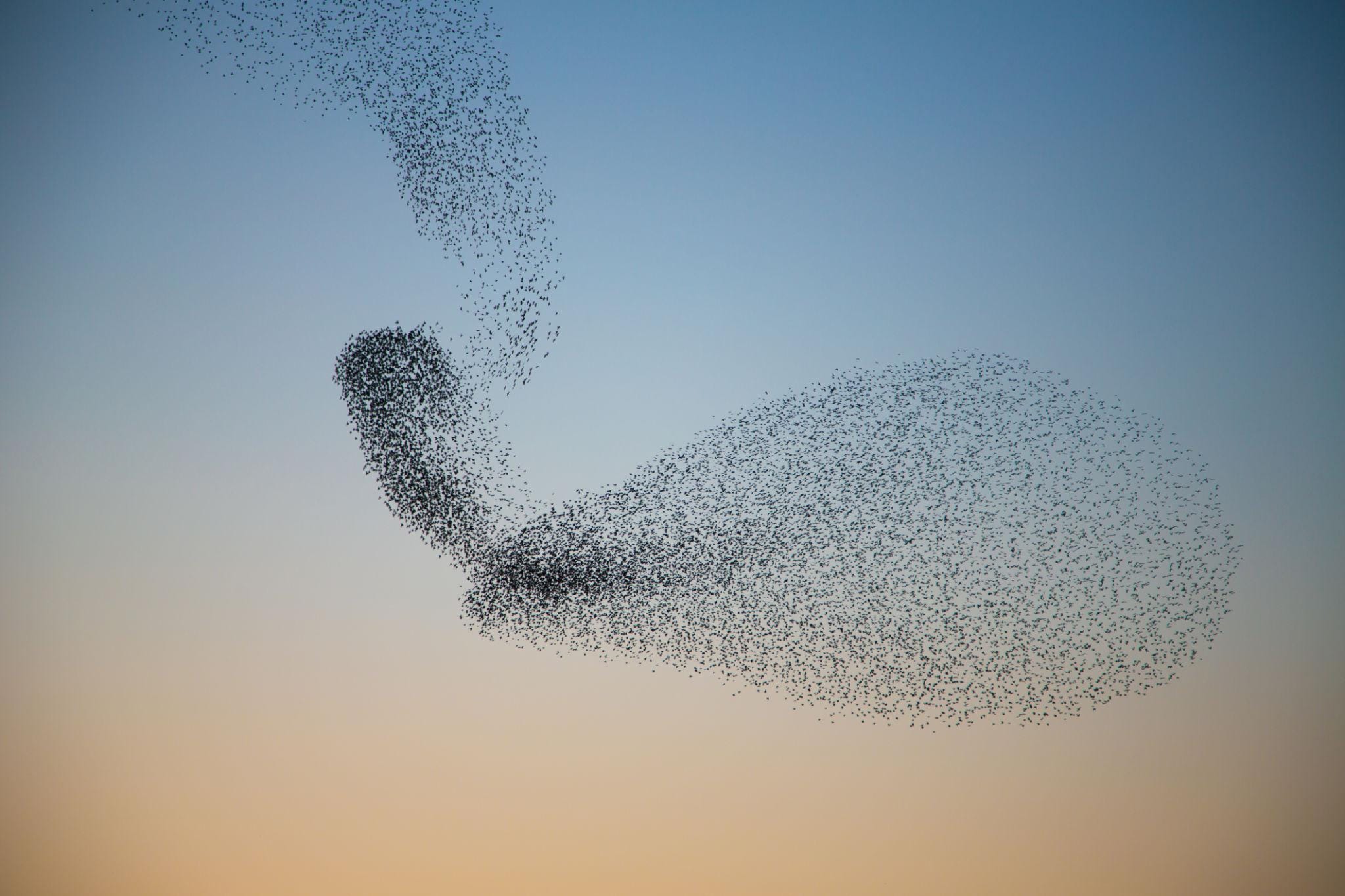
Recently, I was talking with a group of friends about research when someone mentioned that one of the most accomplished senior investigators I know views research as a creative outlet. The comment surprised me, not because I disagreed with it, but because I had never thought about research in those terms before. Research was something I associated with rigor, analysis, and discipline. Creativity belonged somewhere else. It belonged to artists, writers, musicians, and designers. Yet I found myself returning to the observation over the next several days because it seemed to explain something I had struggled to understand about myself for years.
I have never felt like the stereotypical researcher. Perhaps it was all the glassware I broke in organic chemistry lab. Perhaps it was the realization that I am fundamentally incapable of following a recipe exactly as written. Even now, I tend to see instructions as suggestions. Throughout my life, I have been drawn to activities that involve making things. Sometimes that has meant writing. Sometimes it has meant crafts, home projects, art, or gardening. I have always enjoyed the process of imagining how something could be improved, redesigned, or viewed from a different perspective.
For much of my career, I viewed those interests as separate from my scientific work. They were hobbies. Diversions. Things I did when I was not doing research. Looking back, I am not sure that distinction is accurate.
One of my earliest mentors once asked whether I thought I could come up with my own research ideas. At the time, I remember thinking that I probably could, but that it was difficult to know which questions mattered until I understood a field deeply enough. Years later, I realize that conversation was really about something else entirely. It was about where ideas come from.
The longer I have spent in academic medicine, the more I have come to appreciate how little we talk about that question. We spend years teaching scientists how to evaluate ideas. We teach statistics, epidemiology, study design, and critical appraisal. We teach people how to identify bias, recognize methodological flaws, and determine whether a conclusion is supported by the evidence. These are essential skills. They are the foundation of good science. But they are not the same thing as generating an idea in the first place. As a mentor, I should be talking about this more.
How does someone identify a question worth pursuing? Why do some investigators repeatedly see opportunities that others miss? Why do certain people seem able to generate hypotheses with remarkable consistency while others struggle to move beyond incremental extensions of existing work?
I suspect we underestimate the role of creativity.
The word itself makes many scientists uncomfortable because it sounds imprecise. Yet when I look at the researchers I admire most, creativity is often one of their defining characteristics. They see connections that others do not. They approach problems from unexpected angles. They borrow ideas from one field and apply them to another. They are often curious about subjects far beyond their immediate area of expertise.
Benjamin Franklin is remembered as a scientist, but he was also a printer, writer, inventor, diplomat, and entrepreneur. He moved effortlessly between disciplines and seemed incapable of limiting his curiosity to a single domain. Thomas Edison approached invention less as a series of isolated breakthroughs and more as a lifelong process of experimentation and tinkering. What made these individuals remarkable was not simply intelligence. It was their ability to draw connections across seemingly unrelated areas of knowledge.
The more I think about it, the more I wonder whether creativity is not about creating something entirely new. Very little in science emerges from a vacuum. Most discoveries build upon observations that already exist. Perhaps creativity is better understood as the ability to recognize relationships that others miss. A new hypothesis often begins with two ideas that previously appeared unrelated. The breakthrough comes from realizing they belong together.
Research suddenly looks very different when viewed through that lens. Scientific discovery is not simply the accumulation of knowledge. It is also the organization of knowledge. It requires pattern recognition, analogy, synthesis, and reframing. It requires the ability to ask whether an observation from one domain might help explain something in another. In hindsight, these connections often seem obvious. Before the discovery, they rarely do.
Looking back at my own career, many of the ideas that ultimately proved most valuable did not emerge while reading another pulmonary paper. They emerged while writing, teaching, leading teams, talking with colleagues from different disciplines, or trying to explain a complicated concept in a simpler way. The scientific insight often arrived later. What came first was a connection.
This realization has fundamentally changed how I think about hobbies and “side interests”. For years, I assumed they were separate from my work as a scientist. Increasingly, I wonder whether they have been helping me to develop one of the most important scientific skills all along. Every book, hobby, project, and conversation expands the pool of ideas available for future connections. Most will never lead anywhere. But a few will. The challenge is that we rarely know which ones in advance.
The Upshot
The timing of this discussion feels particularly relevant. We are entering an era in which knowledge itself is becoming increasingly accessible. AI can retrieve information, summarize literature, generate outlines, and answer questions in seconds. Many of the tasks that once signaled expertise are becoming easier to automate.
Yet AI has also made me think more carefully about where ideas come from. Information is not the same thing as insight. Knowing facts is not the same thing as recognizing which facts matter. The challenge is no longer simply finding answers. Increasingly, it may be asking better questions.
Creativity may still represent one of the most valuable human skills in an age of abundant information. The ability to connect ideas, draw from diverse experiences, and recognize possibilities that others overlook is becoming more important, not less. Seemingly unrelated interests matter more than we realize. They expand the pool of experiences from which new ideas emerge.
New ideas rarely appear out of nowhere. More often, they emerge from the unexpected intersection of things we already know. AI may make knowledge more accessible than ever before. What remains uniquely human is deciding what is interesting, what is important, and what might be possible.
Great read! I have often thought about it from the opposite perspective, seeing science within my creative outlets (the “anatomy” of a crochet stitch, math within music, etc), but this is a very interesting take on idea generation and that we’re not quite ready for AI to replace us completely!