

Nothing Left to Lose
Why the best World Cup Match wasn't the final.

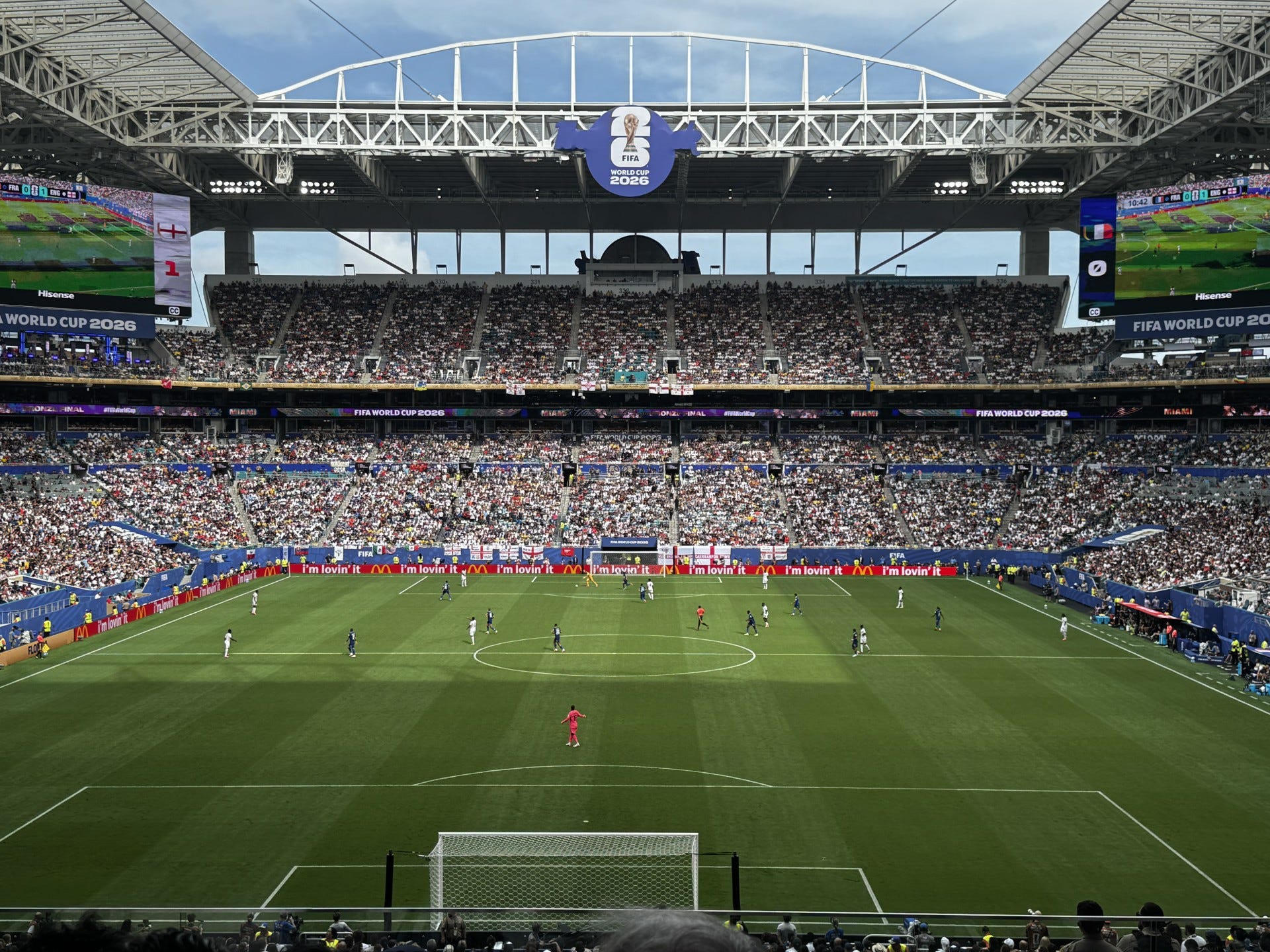
I don’t usually share personal photos, and I’m pretty sure this is my first Substack essay about sports. But I had the opportunity to attend the England–France bronze match at the FIFA World Cup this weekend with my football enthusiast son. Going in, I knew expectations for the game were low. The teams were exhausted. Harry Kane was pulled from the starting lineup. Analysts predicted neither team had their heart in it for a third-place match. But what I experienced was one of the most entertaining sporting events I’ve ever witnessed.
There was an energy to the match that was difficult to describe. Both teams attacked relentlessly. They played with pace, imagination, and confidence. There was very little hesitation. Instead of protecting a lead or waiting for the perfect opportunity, they seemed willing to create one. Every few minutes, there was another breathtaking run, another impossible pass, another goal. The crowd knew it was watching something special. Walking out of the stadium, I couldn’t stop thinking about why.
I’ve watched enough elite sport to know that the highest level of competition isn’t always the most enjoyable to watch. Championship games can become cautious affairs. The final World Cup match was scoreless until extra time. Every mistake carries enormous consequences. Players become understandably conservative. Coaches emphasize structure over creativity. The margin for error becomes so small that avoiding mistakes becomes the dominant strategy. The bronze match was a different game entirely. It was chaotic and fun, with the most goals scored in the entire tournament. The greatest disappointment had already occurred. Neither team would be lifting the World Cup trophy. But perhaps there was also something liberating about knowing that the worst had already happened. With less left to protect, they simply played.
Oddly, the game reminded me of one of my favorite scenes from the 1997 movie Gattaca. As boys, Vincent (Ethan Hawke) and his genetically gifted brother would swim out into the ocean to see who could go farther. Vincent always won. When his brother finally asked how, Vincent answered simply: “I never saved anything for the swim back.” I’ve thought about that line many times over the years. It isn’t really about swimming. It’s about the freedom that comes from fully committing to the moment instead of constantly conserving energy for every possible future outcome. Watching England and France, I wondered whether the same thing was happening. Neither team seemed to be playing as though they had something precious left to protect. They were simply willing to commit fully to every attack, every run, every opportunity.

It made me think about how often this scenario plays out in our professional lives. Medicine trains us to avoid mistakes. Science rewards rigor, skepticism, and careful interpretation. Leadership often requires thoughtful deliberation before action. Those are important instincts, and they serve an important purpose. But somewhere along the way, many of us begin to confuse avoiding failure with pursuing excellence. We hesitate to share an idea until it’s perfect. We wait another year to apply for the grant. We pass on writing the opinion piece because someone else probably knows more. We decline the invitation to speak because we’re worried we aren’t quite ready. We choose the safer project instead of the ambitious one because the safer one is less likely to fail.
Sometimes that restraint is wise. Sometimes it’s simply fear wearing the clothes of prudence. The irony is that the work we remember most, the discoveries that change practice, the leaders who shift culture, and the careers that take unexpected turns rarely come from people who spend all their energy trying not to lose. They come from people who were willing to pursue something meaningful, even knowing that failure was possible.
And I couldn’t help wondering whether freedom is one of the most underappreciated performance enhancers we have. Not freedom from preparation or discipline, but freedom from the constant fear of making a mistake. The confidence to attempt the difficult pass. To take the shot. To create instead of simply protect. Perhaps that’s what made the match so memorable. It wasn’t just extraordinary talent. It was the freedom with which that talent was expressed.
The Upshot
We all need rigor. We all need discipline. But there are moments when the brakes we’ve carefully installed become the very thing preventing our best work. The goal isn’t to abandon caution. It’s to recognize when caution has quietly become our default setting. Whether it’s a football match, a research project, or an important decision, some of life’s most extraordinary moments happen when we stop saving everything for the swim back and commit fully to the one we’re in.
Every once in a while, it may be worth asking ourselves a simple question:
What would I do if I wasn’t so worried about failing?
The irony lies in whether one's repeatedly (and perhaps, unfairly) placed in a position to play with abandon, versus another who's given the opportunity to hoist the golden ball.......
entertainment makes for a good story; hoisting the golden ball makes for a lasting legacy.